Treating androgenetic alopecia: what actually works
It is the most common cause of hair loss and it has science-backed treatment. We review the options that truly slow the loss and restore density, and why starting early changes everything.
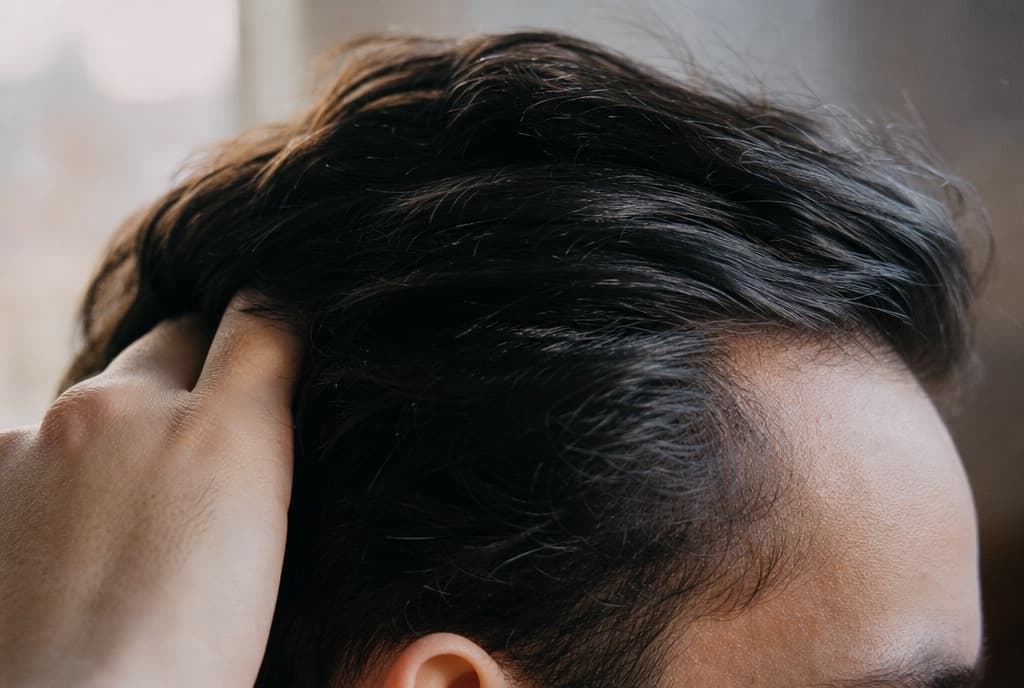
Androgenetic alopecia is by far the most common cause of hair loss in both men and women. It has a strong genetic and hormonal component: certain follicles are sensitive to DHT (a derivative of testosterone), which gradually miniaturizes them until the hair becomes thin, short and, finally, stops growing.
How it shows up
In men it usually starts at the temples and crown. In women a diffuse loss of density over the top is more typical, while the frontal hairline is preserved. In both cases the pattern and speed vary widely from person to person, which is why an individual diagnosis matters so much.

Diagnosis is the first step
Before treating, it is worth confirming that this is androgenetic alopecia and not another cause (deficiencies, thyroid, stress shedding...). In consultation we assess it with trichoscopy —a digital magnifier that examines follicle by follicle— and, when needed, blood work. Getting the treatment right depends on that diagnosis.
Science-backed treatments
- Minoxidil (topical or low-dose oral): prolongs the growth phase and thickens the hair. One of the best-studied pillars.
- Finasteride / dutasteride: reduce DHT and slow miniaturization. Very effective in men; used in selected cases in women.
- Antiandrogens (such as spironolactone): a frequent option in women, always under medical supervision.
- Microneedling and scalp mesotherapy: stimulate the follicle and improve absorption of the active ingredients.
- PRP (platelet-rich plasma): the patient's own growth factors to reinforce the follicle.
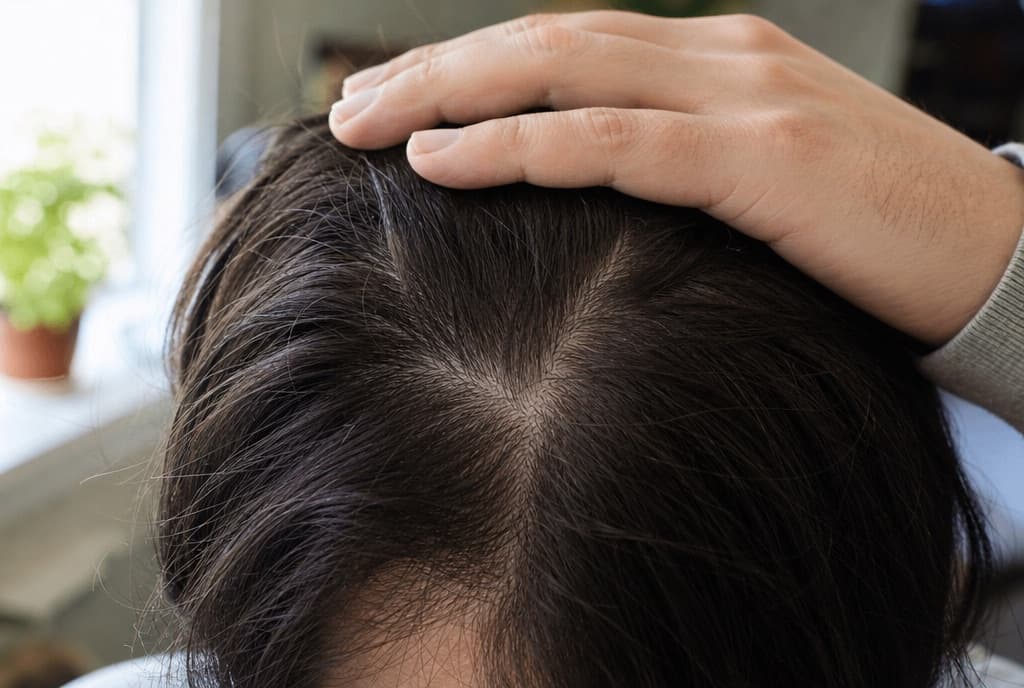
These treatments are not mutually exclusive: the usual approach is to combine them according to the case. What does not exist is an over-the-counter miracle product that solves it alone; the difference comes from a personalized, consistent plan.
Realistic expectations
Hair grows slowly: the first results are assessed from 3–6 months, and the improvement in density consolidates over the first year. The realistic and very achievable goal is to slow the loss and restore thickness and density; keeping what you gain requires consistency. A trichology assessment defines which combination is yours.
Medically reviewed by
Dr. Angélica Ruiz Dueñas
Medical & Aesthetic Dermatology · Professional license 13301912 · Specialty 10345874
This article is for general guidance and does not replace a medical consultation. For a personalized diagnosis, book an assessment with Dr. Angélica Ruiz.
Trichology assessment
Every hair loss has a cause. Let's find yours.
A timely diagnosis preserves more hair. Book a trichology assessment and we'll design a medically backed plan.
See the hair transplant page