Sudden hair shedding: what telogen effluvium is and when to worry
One day you notice the clump of hair in the shower and the alarms go off. Telogen effluvium is the most common cause of sudden shedding — and it almost always recovers. We explain why it happens and which signs do warrant a consultation.

For weeks you have been seeing more hair than usual on the pillow, in the brush and in the drain. You search online and panic. Breathe: the most frequent cause of sudden, abundant shedding is called telogen effluvium, and in the vast majority of cases it is temporary and reversible. Understanding it will take away half the scare.
The clump of hair in the shower
Losing 50–100 hairs a day is normal: it is part of the hair's life cycle. We talk about effluvium when that figure multiplies suddenly — noticeable amounts when washing, brushing, on your clothes — and in a diffuse pattern, all over the head rather than in specific patches. That diffuse pattern is one of the keys that distinguishes it from other types of hair loss.
How the hair cycle works
Each follicle cycles through phases: anagen (growth, lasts years), catagen (transition) and telogen (rest, about 3 months, at the end of which the hair sheds). Normally only 10–15 % of your hair is resting at any time. When the body takes a hit — physical or emotional — it 'sends to sleep' a much larger percentage all at once. Three months later, all those hairs shed together. That is why the shedding shows up when the original trigger has already passed.
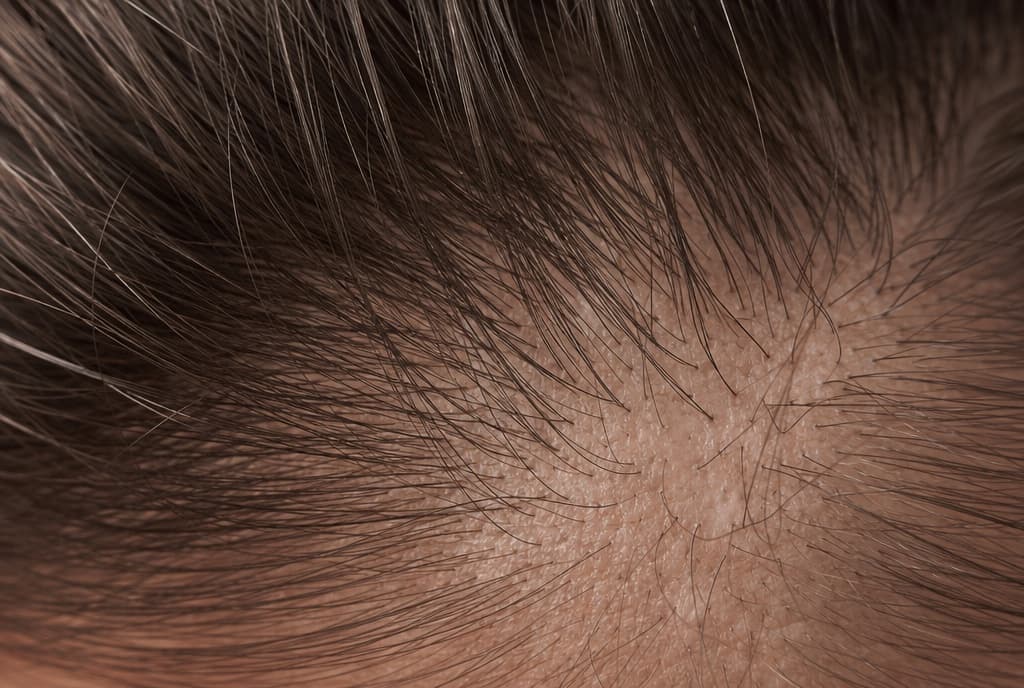
What triggers it
- Intense or sustained stress: work, family, grief.
- Postpartum: the hormonal drop after giving birth is the classic effluvium.
- Restrictive diets and rapid weight loss (iron, zinc, protein).
- High fever or infections (including viral ones) and surgery.
- Starting or changing medication — always mention it at the consultation.
The good news: it almost always recovers
Telogen effluvium does not destroy the follicle. Once the trigger is gone, the cycle normalizes on its own: shedding slows within 3–6 months and density recovers gradually (hair grows ~1 cm per month, so full visual recovery takes longer, especially with long hair). You do not need miracle 'anti-hair-loss' shampoos; you need time, proper nutrition and, if the trigger is still there, to address it.

When you should come in
- The shedding lasts more than 6 months or comes back in cycles.
- You notice less density in specific areas: temples, crown, an ever-wider part line — the typical pattern of androgenetic alopecia.
- Bald patches, itching, pain or scalp flaking appear.
- You are also losing eyebrows, eyelashes or body hair.
- The shedding coincides with general symptoms: extreme fatigue, weight changes, menstrual irregularities.
At the consultation we confirm the diagnosis with trichoscopy, look for the trigger (sometimes with blood work: ferritin, thyroid, vitamin D) and rule out another underlying alopecia. If what you see in the drain worries you, it is better to know for sure — and while you are at it, forget the hair loss myths you have probably been told.
Medically reviewed by
Dr. Angélica Ruiz Dueñas
Medical & Aesthetic Dermatology · Professional license 13301912 · Specialty 10345874
This article is for general guidance and does not replace a medical consultation. For a personalized diagnosis, book an assessment with Dr. Angélica Ruiz.
Trichology assessment
Every hair loss has a cause. Let's find yours.
A timely diagnosis preserves more hair. Book a trichology assessment and we'll design a medically backed plan.
See the hair transplant page