Bad eyebrow transplant: how a poor result is corrected
Hairs growing 'upright,' brush-like density, a shape that isn't yours. A poorly executed eyebrow transplant shows — and can almost always be corrected. The four classic mistakes and their solutions, explained with medical criteria.

Eyebrow transplants are booming — and with the boom, the rush: volume clinics operating on an assembly line, technicians without medical supervision, template designs. The result reaches our practice months later: brows that show. The good news is that almost every bad result can be corrected. The less good news: correcting takes more work than doing it right the first time.
When the transplant shows (and it shouldn't)
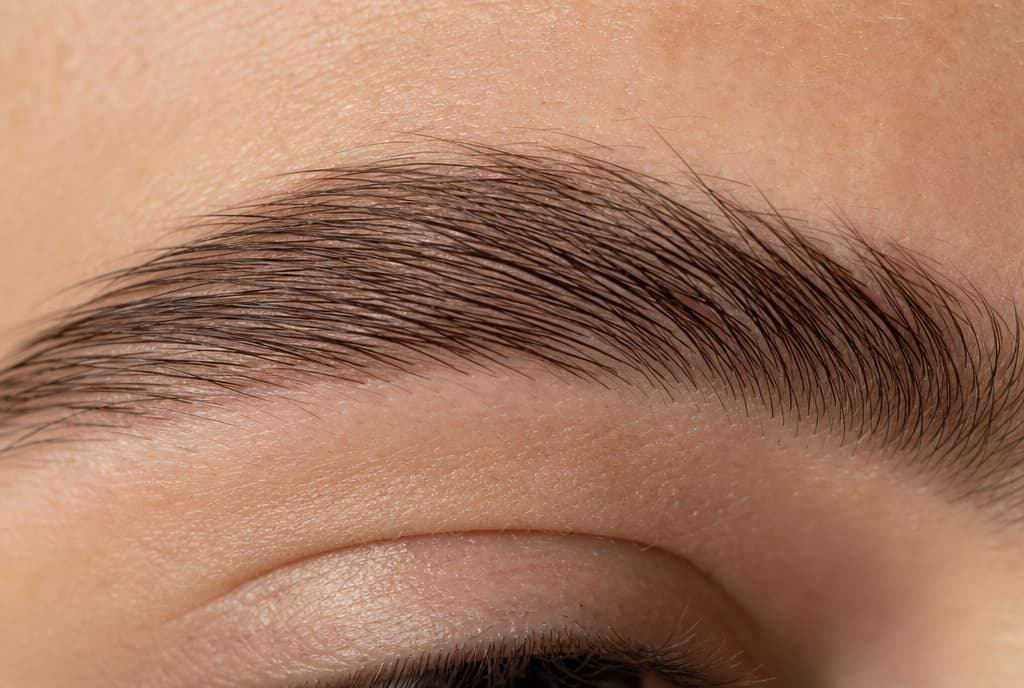
A brow transplanted with proper criteria is indistinguishable from a natural one: that is the yardstick. When something fails, the eye detects it even without naming it — an odd sheen, hairs standing up, symmetry that is a little too perfect. Behind that feeling there is almost always one (or several) of four specific technical mistakes.
The four classic mistakes
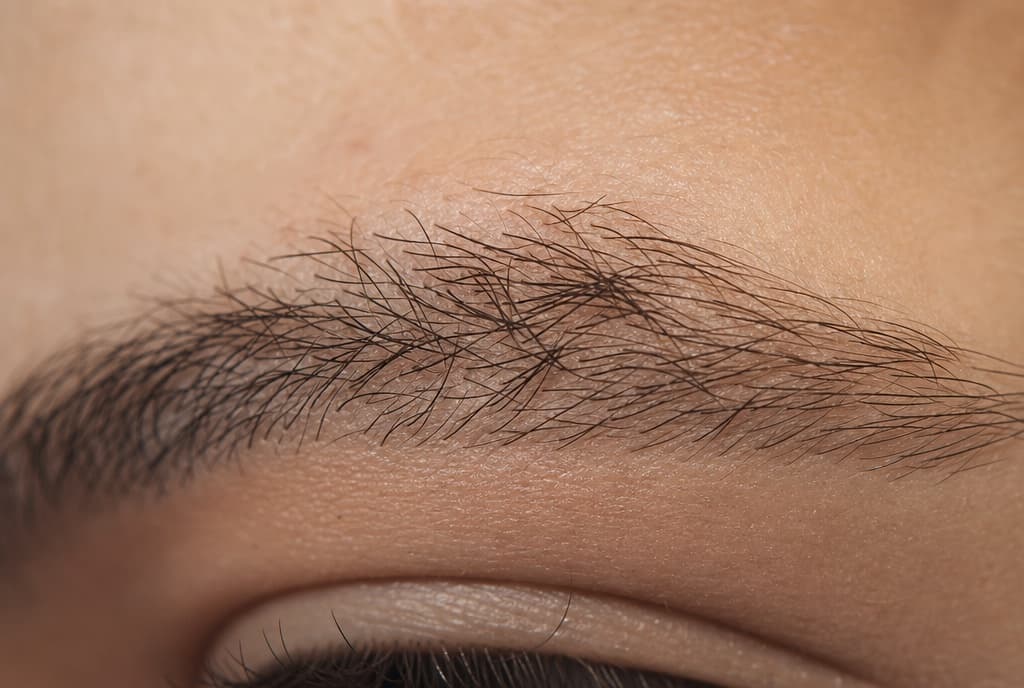
- Wrong direction: mistake number one. The hairs were implanted at too steep an angle and grow 'upright,' facing forward, instead of almost flat against the skin following the natural flow.
- Artificial density: too many follicles too close together. Paradoxically, more hair = less natural: a real brow has variable density, with a soft head and a tapering tail.
- Template design: the same 'catalog' brow for every face, ignoring the person's bone structure and expression.
- Wrong caliber: hairs too thick or curly for a brow, extracted from a poorly chosen donor area.
Can it be corrected? Almost always — like this
Correction proceeds in layers, from least to most invasive: selective removal (sometimes with laser) of misdirected or excess hairs; trimming and training of the salvageable hairs, whose visual angle improves when kept short and groomed; and partial re-grafting with proper technique to rebuild direction, gradual density and shape. If there is also micropigmentation under the transplant, its laser removal is assessed as a first step.
What we evaluate in a correction
Every correction starts with an inventory: which hairs are fine and stay, which come out, how much donor area remains available, how the skin is doing (scars from the first transplant, pigments) and — most importantly — which brow the patient actually wants, which is almost never the one she was given. From there comes a phased plan with realistic expectations: a good correction takes longer than a good primary transplant.
How to choose right the first time
The best correction is the one that is never needed. The quality signals are always the same: a specialist physician who designs with you (not a technician with a template), time devoted to your case — this is what a well-done transplant day looks like —, documented cases of their own and honesty about what can and cannot be achieved. The rules of masculine and feminine design differ, but the criterion is one: the brow must be yours. If you are coming from a bad result, the assessment is the first step — no judgment, and with a plan.
Medically reviewed by
Dr. Angélica Ruiz Dueñas
Medical & Aesthetic Dermatology · Professional license 13301912 · Specialty 10345874
This article is for general guidance and does not replace a medical consultation. For a personalized diagnosis, book an assessment with Dr. Angélica Ruiz.
Eyebrow transplant
Want natural eyebrows that last for good?
Find out in consultation whether the eyebrow transplant is for you. We study your density, shape and expectations to give you a tailored result.
See the eyebrow transplant page