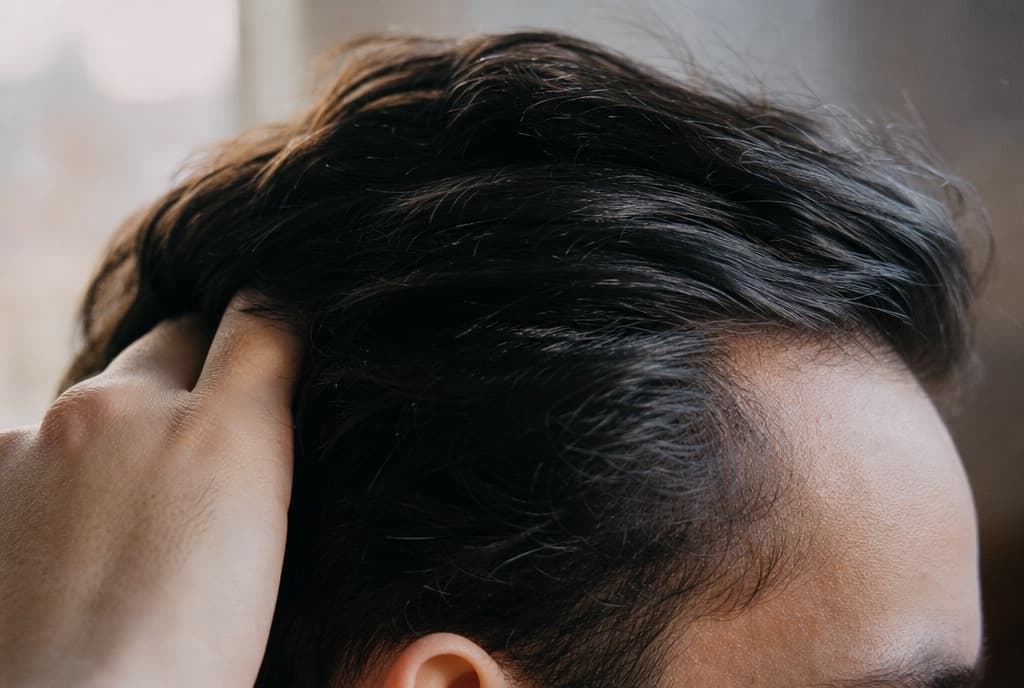
Alopecia areata: when hair falls out in circles
A round, smooth, hairless patch that appeared overnight. Alopecia areata is as frightening as hair conditions get — but the follicle is still alive, and that changes everything. What it is, why it happens and how it's treated today.

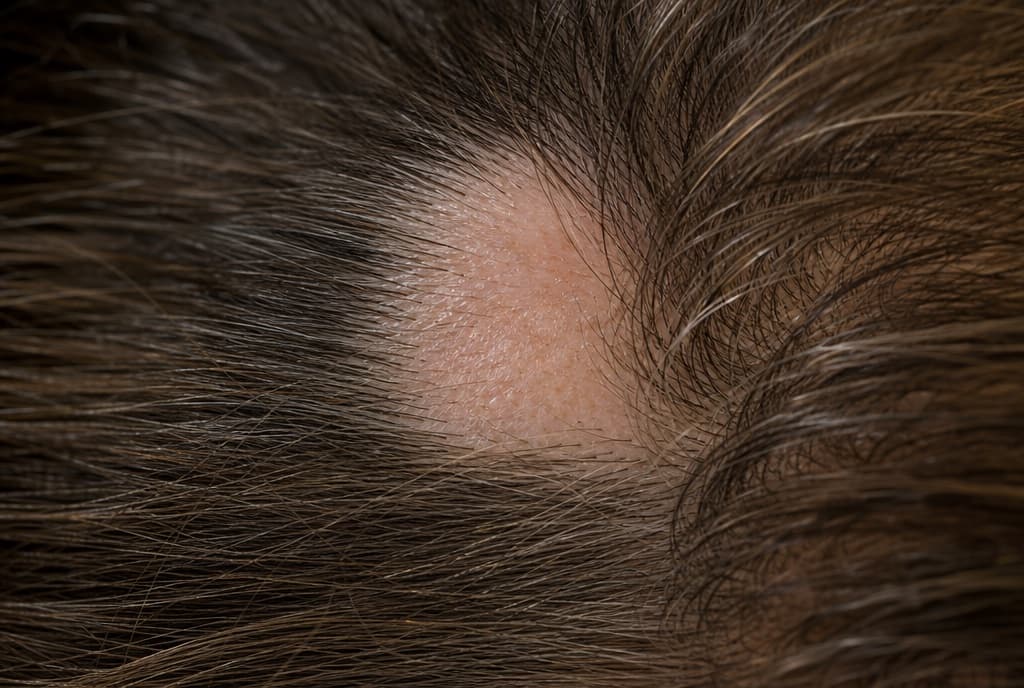
It is usually discovered by accident: the hairdresser who goes quiet, the hand that feels a smooth area while combing. A round, completely smooth, hairless patch where there was normal hair a month ago. Alopecia areata is among the most distressing hair consultations — and among those that benefit most from understanding what is really going on.
The patch that appeared overnight
Typical areata looks like this: one or several round or oval patches of smooth, healthy-looking skin (no flaking, no scarring), on the scalp, beard, eyebrows or any hair-bearing area. It can be single and stable, or appear in flares. Sometimes it comes with tiny pits in the nails — a detail that guides us a lot at the consultation.
What is happening: your immune system and the follicle
Areata is autoimmune: your defenses mistakenly identify the follicle as a threat and attack it. The follicle 'switches off' and releases the hair — but, and this is the important news, it neither dies nor scars: it stays dormant, intact under the skin, waiting for the attack to stop. That is why areata can fully regrow even after years — impossible in the alopecias that destroy the follicle.
Is it stress? The nuanced answer
Stress does not cause areata — the cause is an autoimmune genetic predisposition. But an episode of intense stress can act as a trigger for a flare in someone who already has that predisposition. The nuance matters: blaming yourself for 'being stressed' adds suffering and changes nothing about treatment. Nor are diet, shampoo or 'poor circulation' to blame — no different from hair loss and its myths: the more anxiety, the more pseudoscience on offer.
The treatments we use today
- Intralesional corticosteroid: micro-injections into the patch, the standard for localized patches in adults. Visible results in 4-8 weeks.
- Topical treatment: potent corticosteroids or immunomodulators, depending on area and age.
- Minoxidil as support: it speeds regrowth once the attack subsides.
- Extensive forms: new systemic options (JAK inhibitors) have changed the landscape for severe cases — assessed case by case.
- Watchful waiting: in small single patches, up to a third regrow on their own within months. Sometimes the best prescription is surveillance.
What not to do (or believe)
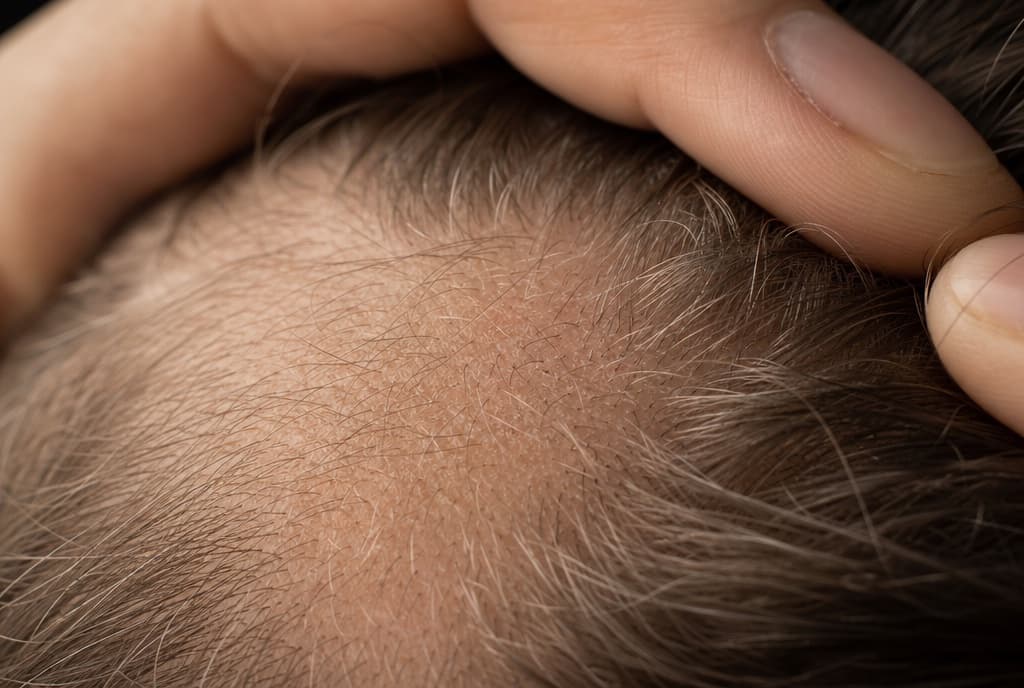
Don't rub the patch with garlic, onion or 'remedies that worked for someone' — they irritate the skin and delay the consultation that actually helps. Don't isolate yourself: areata's emotional impact is real and addressing it is part of the treatment. And above all, don't wait months 'to see if it grows back' without a diagnosis: other alopecias masquerade as areata, and a trichoscopy examination tells them apart in minutes. If you have found a patch, bring it to the clinic this week — the full hair-health plan is in our complete approach.
Medically reviewed by
Dr. Angélica Ruiz Dueñas
Medical & Aesthetic Dermatology · Professional license 13301912 · Specialty 10345874
This article is for general guidance and does not replace a medical consultation. For a personalized diagnosis, book an assessment with Dr. Angélica Ruiz.
Trichology assessment
Every hair loss has a cause. Let's find yours.
A timely diagnosis preserves more hair. Book a trichology assessment and we'll design a medically backed plan.
See the hair transplant page