The donor area: the silent key to every transplant (scalp or brows)
Everyone asks about the area to be filled; almost nobody about the area the hair will come from. Mistake: the nape is a finite resource, and how it is managed defines today's result — and tomorrow's options.
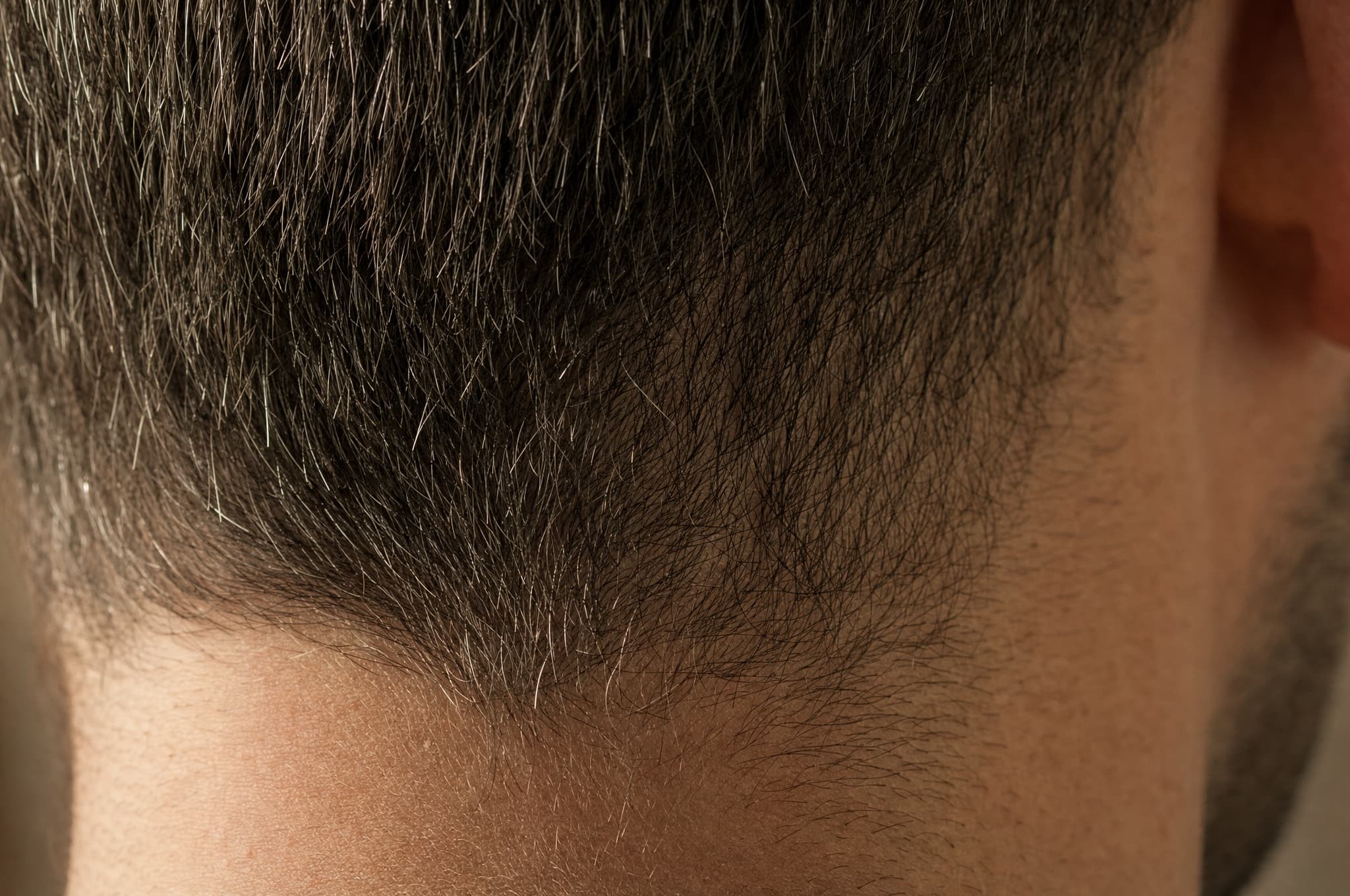
In every transplant consultation — scalp or brows — there is a lead actress and a supporting one. The lead is the area to be repopulated: everyone asks about her. The supporting one is the donor area — and, as in the movies, the supporting role is what holds the film together. This article puts it where it belongs: center stage.
The bank everything comes from
Every grafted hair comes from somewhere: a transplant creates no follicles, it redistributes them. That 'somewhere' is almost always the band across the nape and the sides of the head. Every follicle extracted from there is a debit on an account that accepts no deposits: you were born with a balance, and that is all there is. Managing that account well is, quite literally, half the medicine of transplantation.
Why the nape doesn't go bald
Androgenetic alopecia doesn't affect the whole scalp equally: follicles at the crown and temples are sensitive to the hormone DHT, which miniaturizes them; those at the nape are genetically deaf to that signal. That is why even the most advanced baldness keeps its horseshoe of hair at the back. And here is the transplant's magic: the grafted follicle keeps its genetics of origin — it carries its resistance with it, wherever it goes.
Does it show afterwards? The nuanced answer
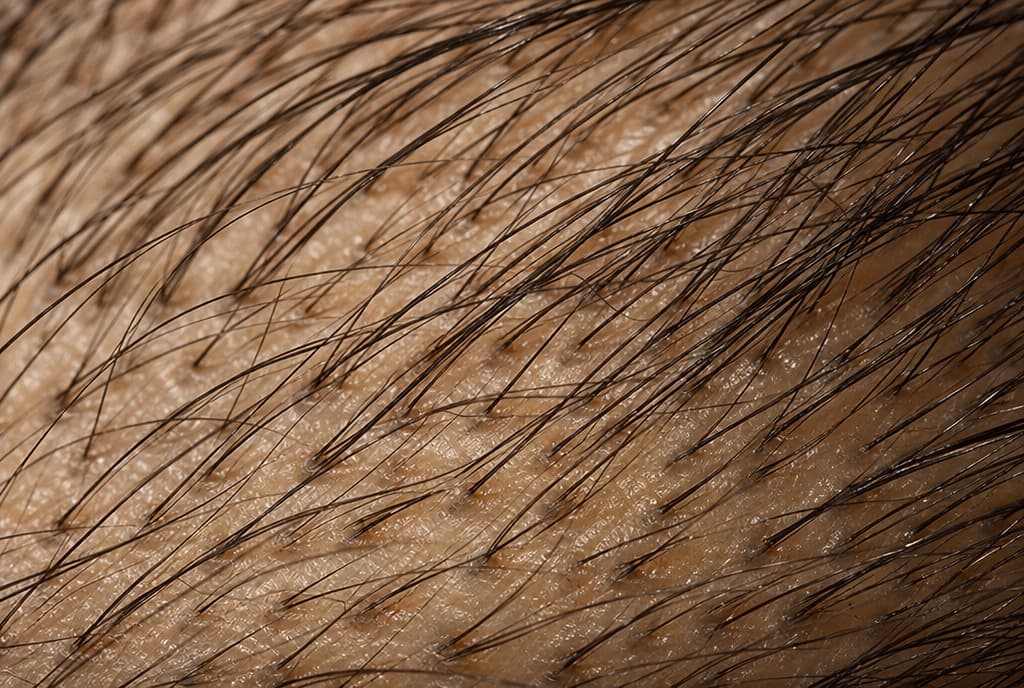
With well-planned FUE, no: units are extracted in a scattered pattern, never adjacent, spreading the 'harvest' across the whole band so the remaining density keeps covering. Each extraction leaves a sub-millimeter dot that heals in days. The fine print: *well-planned* is the key. An overharvested donor — too many follicles, concentrated extraction — ends up visibly thin or moth-eaten, and that IS permanent. It is the typical signature of volume clinics promising 'mega-sessions.'
A finite resource: donor math
An average donor area yields a limited number of extractable follicles over a lifetime — not per surgery. That figure must be spent strategically: cover the visible first (hairline, facial frame), densify later, and reserve for the alopecia's future advance. That is why operating young without stabilizing the loss is doubly risky: donor gets spent chasing a pattern that is still moving. And that is why maintenance medical treatment is not optional: every native hair you keep is donor you don't spend.

What happens when someone manages it badly
A depleted donor is one of hair medicine's few irreversible mistakes: it cannot be replenished, and it limits any future correction — we see it often in corrections of botched transplants, where donor scarcity is what most constrains the plan. The moral is simple: when choosing where to have surgery, don't just ask what they will put in front; ask how they will care for what's behind. At our assessment, your donor's condition and strategy are part of the written plan — start here.
Medically reviewed by
Dr. Angélica Ruiz Dueñas
Medical & Aesthetic Dermatology · Professional license 13301912 · Specialty 10345874
This article is for general guidance and does not replace a medical consultation. For a personalized diagnosis, book an assessment with Dr. Angélica Ruiz.
Trichology assessment
Every hair loss has a cause. Let's find yours.
A timely diagnosis preserves more hair. Book a trichology assessment and we'll design a medically backed plan.
See the hair transplant page