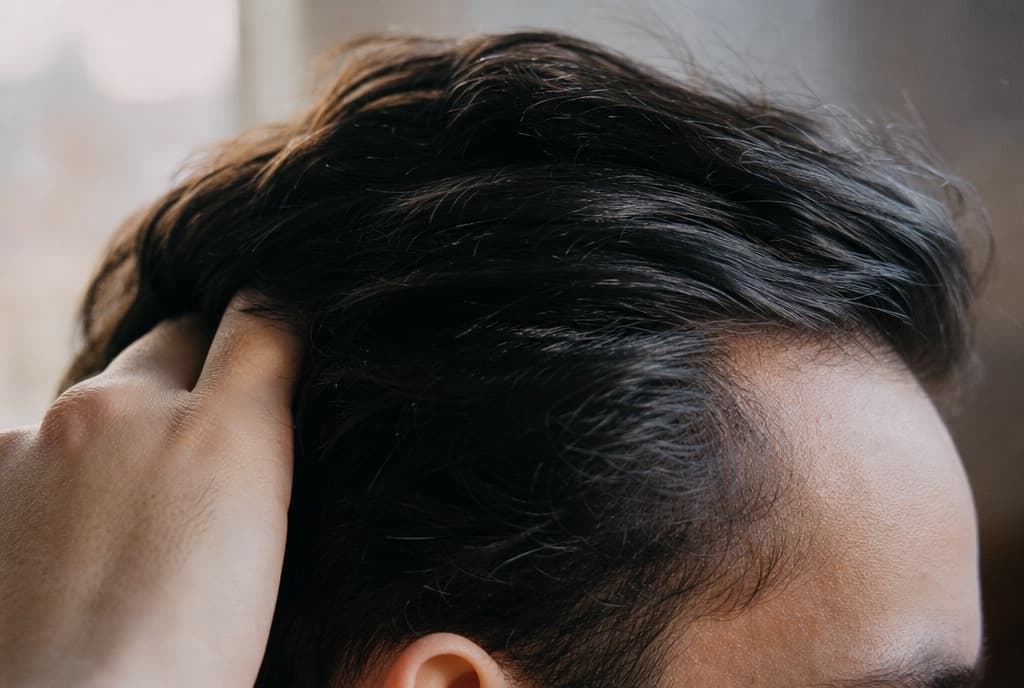
Hair transplant results month by month: the honest calendar
The hair transplant has a valley-shaped calendar: first you lose the grafted hair, then you cross a three-month desert, and only afterwards does the show begin. Those who know it enjoy it; those who don't, suffer it. Month by month, unvarnished.
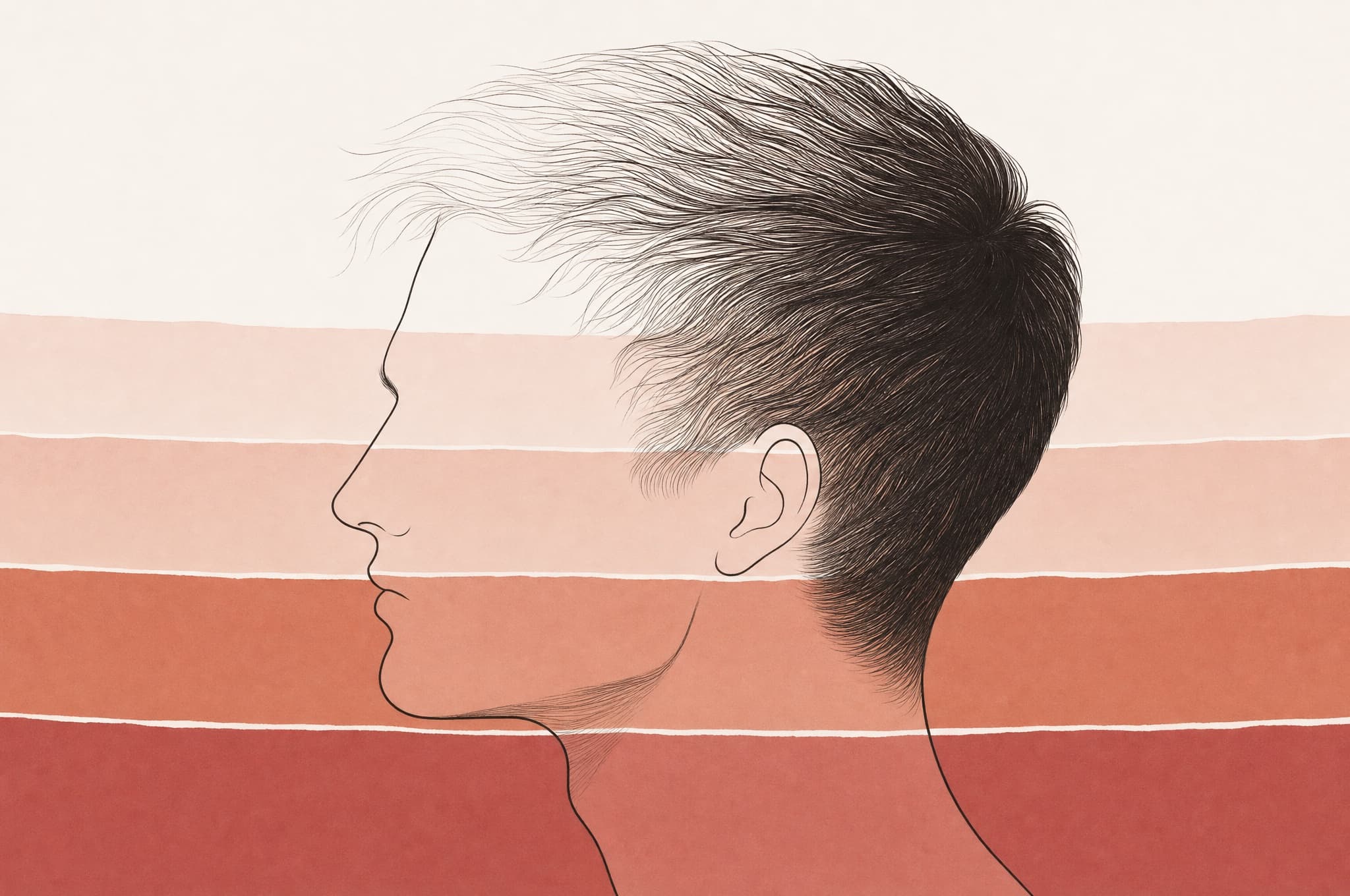
If for the eyebrow transplant we ask for informed patience, for the scalp we ask for it twice over: the calendar is longer — the final result takes 12 to 18 months — and the middle valley is more treacherous for morale. This is the honest map of the road, so no month catches you unwarned.
The valley-shaped curve (again)
You leave the operating room with the result 'installed': short hairs sketching your new hairline. Enjoy it knowingly, because it is temporary: over the following weeks almost all of that hair will shed, to return, permanent, months later. The real curve is: initial thrill → shedding → desert → sprouts → takeoff → result. Whoever expects a straight ascending line suffers through three of the six phases.
Weeks 1-2: scabs and discipline
The first ten days belong to the aftercare: fine scabs around each graft, washes with a prescribed technique, sleeping propped up and zero manipulation. By day 10-14 the scabs have fallen and the recipient area looks clean — hairs still in place. It is the last moment of the 'initial thrill.'
The scalp shock loss
Between weeks 2 and 8 comes the expected shedding: the transplanted follicle, after the stress of the journey, enters a resting phase and releases the shaft — but the root stays alive and anchored. Some native hair around the worked area can shed too (the resident's shock loss), and it likewise recovers. We write it large because it is the moment that generates the most panicked messages: it is normal, it is expected and it is temporary.
Months 4-9: from desert to takeoff
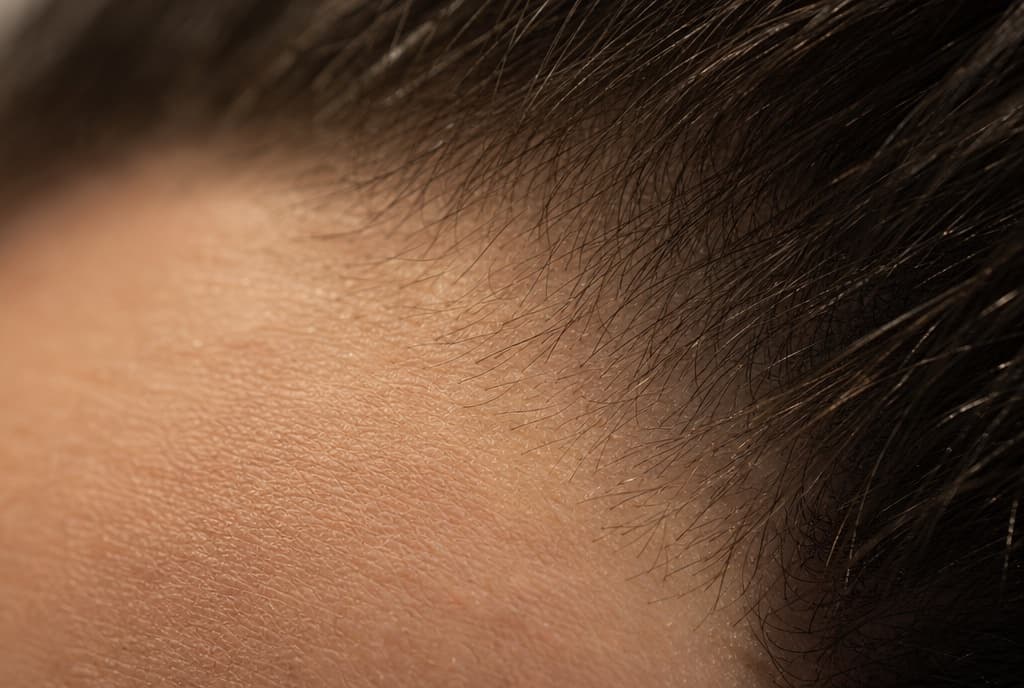
- Months 2-3, the desert: the area looks almost as it did before surgery. The psychologically hardest phase — and the most normal.
- Month 4: first sprouts — fine, short hair, sometimes curly or unruly. Don't judge the result by it: it is the draft.
- Months 5-6: growth becomes widespread. Density is still partial, but combing starts making sense again.
- Months 7-9, the great leap: every month shows. The hair thickens, lengthens and falls into place; the hairline takes its final shape.
The final result: 12-18 months
Between months 12 and 18, the grafted hair reaches its definitive thickness and behavior — the crown, traditionally, is the last to arrive. Two maintenance reminders: the transplanted hair is yours forever, but the native hair still needs its medical treatment so it doesn't keep thinning around it (the why, here); and timings vary between people — your scheduled follow-ups are what tell whether your curve is in range.

How to document your progress without going crazy
The practical rule: monthly photo yes, daily phone-in-the-mirror inspection no. In between, live your life — hair grows just as fast unsupervised. If you are reading this before surgery, you are already ahead: you will know what each phase is when it arrives. And if you are still deciding, start with the procedure step by step and with whether you are a candidate — the full calendar is explained, with your case in front of us, at the assessment.
Medically reviewed by
Dr. Angélica Ruiz Dueñas
Medical & Aesthetic Dermatology · Professional license 13301912 · Specialty 10345874
This article is for general guidance and does not replace a medical consultation. For a personalized diagnosis, book an assessment with Dr. Angélica Ruiz.
Trichology assessment
Every hair loss has a cause. Let's find yours.
A timely diagnosis preserves more hair. Book a trichology assessment and we'll design a medically backed plan.
See the hair transplant page